
Steven Naifeh, Chairman Emeritus
In a restored Gilded Age mansion on a quiet Aiken street, one of America’s most accomplished biographers spends his days arranging copper, steel, and color into patterns that feel both ancient and brand new.
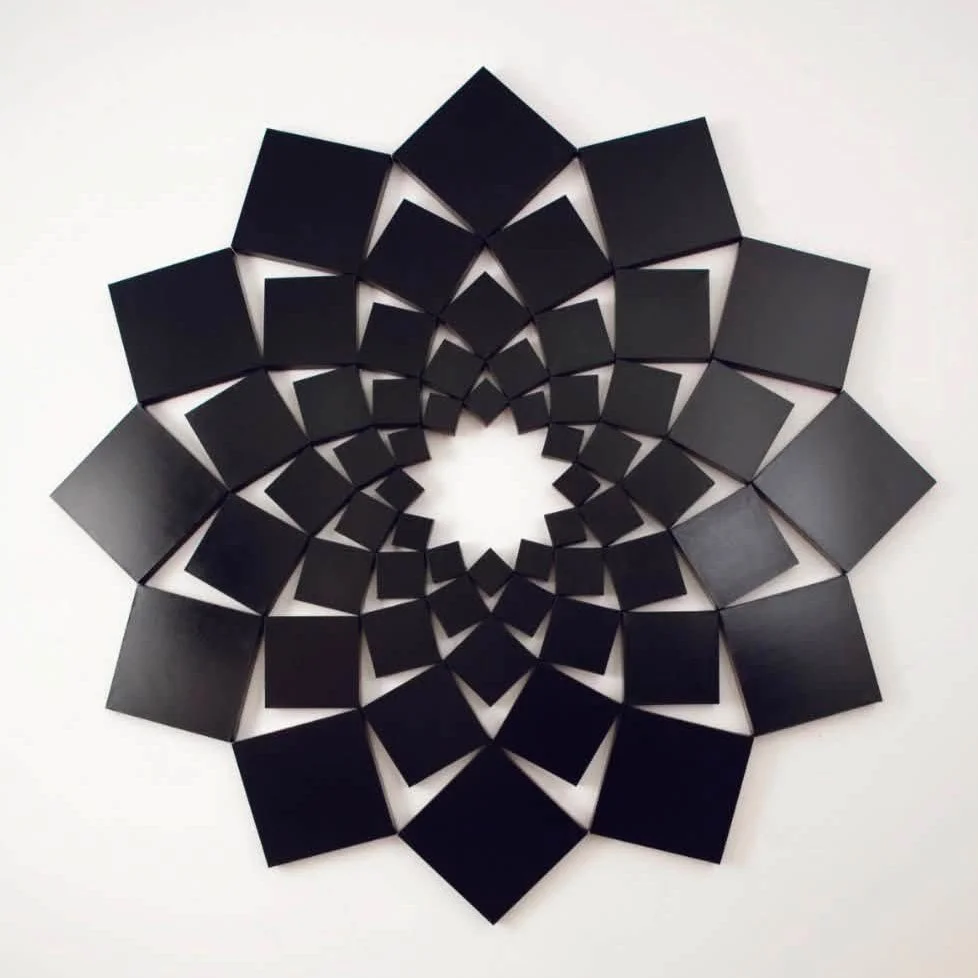
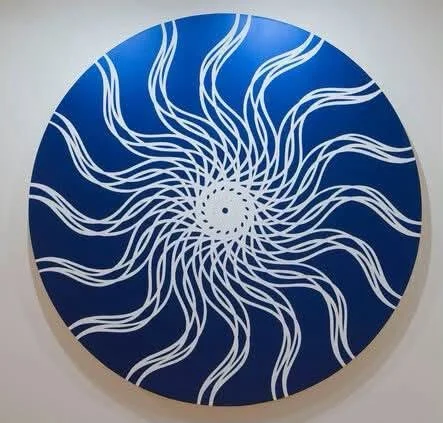
Steven Naifeh is best known for co-authoring the Pulitzer Prize-winning biography Jackson Pollock: An American Saga and the monumental Van Gogh: The Life. Yet for decades he has pursued a parallel career as a geometric abstract artist whose large-scale works fuse the mathematical elegance of Islamic design with the cool precision of Western modernism. Born in Tehran to American diplomats and raised across the Middle East, Naifeh absorbed the intricate geometry of mosques, tiles, and textiles as a child.
Those early impressions never left him. His paintings and modular sculptures—often composed of dozens of carefully calculated pieces—translate centuries-old Islamic principles into contemporary form. The result is art that refuses to choose sides: it is simultaneously medieval and modern, Eastern and Western, rigorous and playful.
In the late 1980s, Naifeh and his longtime collaborator Gregory White Smith left New York and bought Joye Cottage, the sprawling Whitney-Vanderbilt estate that sits on a street named Easy in the heart of Aiken’s historic district. They spent years restoring the sixty-room house, an experience they later chronicled in the book On a Street Called Easy, In a Cottage Called Joye.
In the process, they planted roots deep enough that Aiken became not just a residence but the quiet center of Naifeh’s artistic life.
Today his works hang in museum collections from Princeton to Dubai. They have been shown in solo exhibitions from New York to Abu Dhabi. Yet the man himself remains largely out of the spotlight, content to work in the light-filled spaces of a South Carolina mansion that once belonged to one of America’s great industrial families.
In an age of noise, Steven Naifeh offers something rarer: geometry that feels like harmony, and a life that quietly proves two very different worlds can occupy the same elegant frame.